For truck drivers and owners in Mallorytown and the greater 1000 Islands region, winter is more than a season—it’s a relentless test of machinery. The picturesque landscape gives way to a challenging environment where hidden ice, relentless road salt, and a continuous cycle of freeze-and-thaw create one of the toughest proving grounds for your truck’s suspension system.
Your suspension is the critical link between your truck and the road. It manages the impact of every pothole, supports every payload, and maintains stability on every slippery turn. At 401 Tire and Truck Repairs, we understand that preparing this system for a 1000 Islands winter isn’t just about comfort; it’s a foundational element of safety and reliability for your work, your business, and your journey home.
Why Winter is Uniquely Harsh on Your Suspension
Eastern Ontario winters create a perfect storm of conditions that target your truck’s undercarriage. Understanding these threats is the first step in defending against them.
- Road Salt and Corrosion: The heavy use of road salt on our highways, like the 401 and Thousand Islands Parkway, is essential for safety but devastating for metal components. Salt, mixed with moisture, creates a highly corrosive brine that clings to every suspension part—leaf springs, shock mounts, bolts, and air lines. This corrosion doesn’t just look bad; it actively weakens metal, leading to cracks in leaf springs, seized bolts, and, most dangerously, potential failure of critical components.
- The Pothole Menace: Potholes are not mere nuisances; they are suspension destroyers. They form when water seeps into pavement cracks, freezes, expands, and thaws, breaking the road apart. Striking a deep pothole can cause immediate, catastrophic damage such as bent rims, blown-out tires, and broken suspension components. The repeated impacts from smaller holes gradually fatigue and weaken parts over time.
- Freezing Temperatures and Air Systems: For trucks equipped with air suspension or air brakes, extreme cold presents specific hazards. Moisture inside the air system can freeze, leading to blockages in air lines. This can cause erratic suspension behavior, a loss of ride-height leveling, or, in severe cases, affect brake system response. Rubber components like air springs and bushings also become less flexible and more prone to cracking in sub-zero temperatures.
Your Pre-Winter Suspension Inspection Checklist
A proactive inspection can identify minor wear before it becomes a major roadside failure. Here is a systematic guide to assessing your truck’s suspension health.
Visual and Physical Checks You Can Perform
- Look for Visible Damage or Sagging: Walk around your truck when it’s unloaded and parked on level ground. Does one corner or side appear lower than the others? A sagging side often points to a worn-out leaf spring, a deflated air bag, or a failing shock absorber.
- Inspect for Corrosion: Safely look at the suspension components. Pay close attention to leaf springs, looking for any signs of cracking, especially where the leaves meet the center bolt. Check for heavy, scaly rust that can compromise structural integrity.
- Check Shock Absorbers and Struts: Look for visible oil leaks or dents on the shock absorber body. A simple bounce test—firmly push down on one corner of the truck’s bumper and release—can indicate wear. If the truck bounces more than once or twice before settling, the shocks are likely worn out.
- Examine Tires for Uneven Wear: Your tires are tell-tale indicators of suspension issues. Run your hand across the tread. Is the wear smooth, or are there cupped, scalloped dips or feathering on the edges? Irregular tire wear is a classic symptom of alignment problems caused by worn suspension parts.
Professional Inspection Points for Maximum Safety
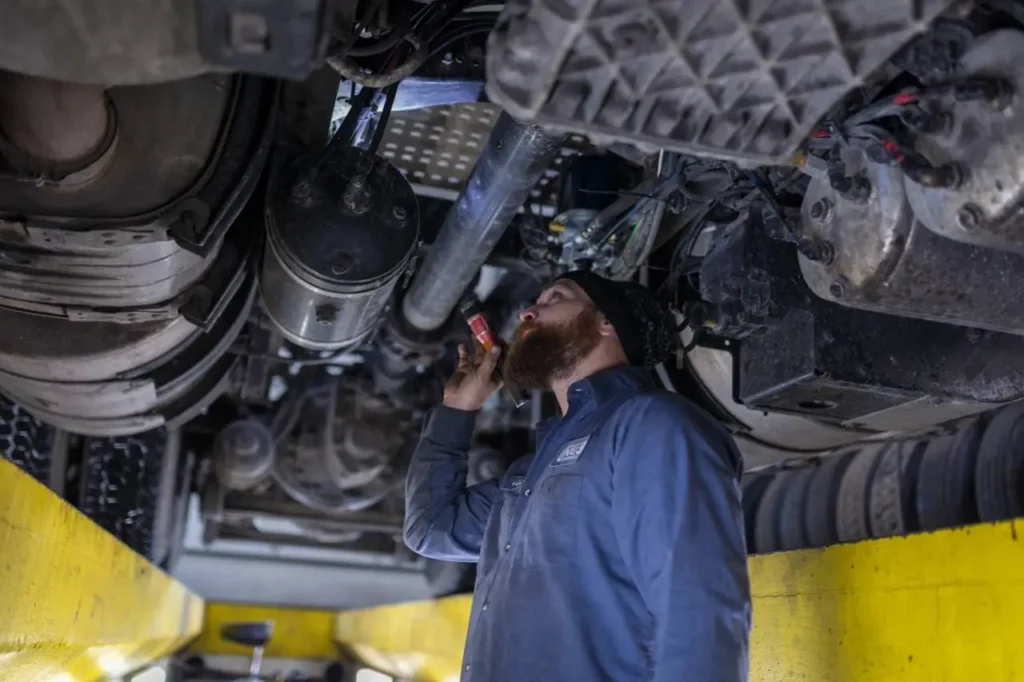
While owner checks are valuable, a professional inspection at 401 Tire and Truck Repairs provides a deeper, safer analysis. Our technicians focus on:
- Bushing Integrity: We check the rubber or polyurethane bushings at all connection points. Worn, cracked, or missing bushings cause excessive play, leading to clunking noises, vague steering, and accelerated wear on other components.
- Air System Integrity (if equipped): For air suspension systems, we perform a detailed check for leaks using specialized methods, ensure the air dryer is functioning to remove moisture, and verify that the compressor is operating correctly. Preventing moisture here is a key winter defense.
- Load Testing and Torque Checks: We assess the suspension under load to ensure it responds correctly and verify that all U-bolts, shackles, and mounting points are secured to the proper torque specifications.
Critical Winter-Specific Maintenance Actions
Beyond inspection, specific preventative actions can fortify your suspension for the months ahead.
- Manage Moisture in Air Systems: This is a top winter priority. Ensure your truck’s air dryer is serviced and functioning properly to strip moisture from the air supply. Regularly draining the air tanks is a simple but vital habit to prevent ice blockages.
- Apply Protective Lubrication: While avoiding heavy grease that attracts grime, applying appropriate, cold-rated lubricants to fittings and the contact points between leaf springs can prevent freezing and reduce wear from friction.
- Prioritize Undercarriage Cleaning: The single most effective thing you can do all winter is wash your truck’s undercarriage frequently. A high-pressure rinse at a wash bay that offers an under-spray removes the salt brine that causes corrosion. Doing this during warmer winter spells is particularly effective.
- Address Issues Immediately: A minor clunk or a slight drift is your truck’s early warning system. Postponing repair allows a small problem to stress adjacent components, leading to more extensive and costly damage.
Recognizing the Signs of Winter Wear and Failure
Stay alert to these warning signs that your suspension needs immediate professional attention:
- Unusual Noises: Listen for new clunks, bangs, or squeaks when going over bumps or turning. These often indicate worn or loose components.
- Poor Handling Characteristics: Symptoms include excessive body roll in corners, a front-end “dive” when braking, or a general feeling of instability, especially on wet or icy roads.
- The “Bounce” Test Failure: As mentioned, excessive bouncing after a bump points directly to worn shock absorbers.
- Uneven Ride Height or Sagging: A visual lean or sag, especially when loaded, demands investigation.
- Steering Wheel Vibration or Pull: A vibrating steering wheel or the truck pulling persistently to one side can signal suspension-related alignment issues.
Trust Your Local 1000 Islands Suspension Specialists
At 401 Tire and Truck Repairs in Mallorytown, we are your neighbors. We drive the same roads, face the same winters, and understand the non-negotiable demand for reliability that comes with living and working in this region. Our expertise is not just in fixing trucks but in applying a deep, local understanding of how our specific environment affects them.
We invite you to bring your truck to us for a comprehensive Pre-Winter Suspension Health Assessment. Our service goes beyond a simple look; we provide a detailed evaluation of every component, from leaf springs and shocks to air lines and bushings. We’ll give you a clear, honest picture of your truck’s readiness and a prioritized plan to ensure it’s safe and dependable for the challenging drive ahead.
Don’t wait for the first major storm to reveal a hidden weakness. Proactive care is the key to safety and savings. Contact 401 Tire and Truck Repairs today to schedule your suspension check-up. Let us help you face the 1000 Islands winter with confidence