The hum of the engine, the open road ahead, and the rhythm of the tires against the asphalt—for truckers and commuters in Kingston, this is a familiar symphony. However, this harmony can be shattered in an instant by a sudden thump, a violent shudder, or the alarming flapping sound of a blown tire. A flat tire on a major thoroughfare like Highway 401 is more than just an inconvenience; it’s a high-stakes situation demanding immediate and intelligent action.
For the drivers navigating the busy corridors around Kingston—from the stretches near Division Street to the物流 corridors heading toward Montreal and Toronto—a tire failure can bring a wave of stress and confusion. Do you attempt to fix it yourself? Do you wait for a tow truck? How do you stay safe?
This guide is designed to navigate you through that chaos. We will walk you through the exact steps to take when a tire blows out on the 401, explain the critical safety protocols you must follow, and explore why mobile truck repair services—like those provided by 401 Tire and Truck Repairs—have become the smartest, safest, and most efficient solution for drivers in Kingston and the surrounding areas.
The Immediate Aftermath: Staying Alive on the Shoulder
When a tire fails at highway speeds, your primary focus must be on control and safety, not on the damage to the tire itself. The first few seconds are critical.
1. Maintain Control and Slow Down Gradually
If you experience a blowout, do not slam on the brakes. This can cause the vehicle to spin out or roll over, especially for high-center-of-gravity trucks. Instead, grip the steering wheel firmly with both hands to keep the vehicle traveling straight. Take your foot off the accelerator and allow the vehicle to slow down naturally by coasting. If you need to brake, do so gently and lightly once you have full control .
2. Find a Safe Haven
Activate your hazard lights immediately to alert other drivers that you are in distress. Guide your vehicle to the nearest safe location. Ideally, this is a full-service rest stop, a truck-friendly on-ramp, or a wide, paved shoulder. Due to the high volume of transport trucks and passenger vehicles on the 401, the shoulder can be dangerous. If you can roll a short distance to a wider area, it is worth the effort. Avoid stopping on bridges, curves, or anywhere with limited visibility for oncoming traffic .
3. The “Stay Put” Decision
Once you are stopped, you face a crucial decision: stay in the vehicle or exit? If you are on a busy highway shoulder with traffic whizzing by at 100 km/h, the safest place is often inside your vehicle with your seatbelt fastened. If you must exit for safety reasons (e.g., the vehicle is on fire or not visible to traffic), do so on the passenger side, away from traffic flow .
The Kingston Context: Why Local Roads Demand Vigilance
Kingston presents unique challenges for commercial vehicles. The weather here is not just a backdrop; it is an active participant in vehicle wear and tear. Kingston’s winters coat the 401 in a slurry of snow and salt, which can hide potholes and debris. The spring thaw inevitably reveals the damage, with potholes that can shear a valve stem or cause sidewall bubbles in an instant .
Furthermore, the specific demands of local routes—from the stop-and-go traffic on Princess Street to the heavy hauls on Sydenham Road—put asymmetric stress on tires. A tire that looks fine in your driveway can fail catastrophically under the heat and friction of a long summer haul on the 401. Recognizing that a flat tire can happen to anyone, anywhere in the Kingston region, is the first step in preparing for it .
The Tow Truck Dilemma: A Costly and Time-Consuming Interruption
Historically, the default response to a significant roadside issue has been to call for a tow. The truck is hooked up, dragged to the nearest shop, and left in a queue of other vehicles awaiting attention. For a commercial driver, this is a nightmare scenario.
First, there is the cost. Towing a heavy commercial truck is expensive. Fees can escalate quickly based on distance and the complexity of the recovery, often costing hundreds of dollars before a single wrench is turned on the actual repair .
Second, there is the time. Being towed to a shop means your truck is now at the mercy of that shop’s schedule. You might wait hours just to be checked in, only to find out the shop doesn’t have the specific tire size in stock. For a trucker hauling time-sensitive freight through the 401 corridor, a delay of half a day can mean missed deadlines, unhappy clients, and significant financial loss .
The Mobile Alternative: Bringing the Shop to You
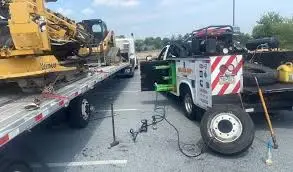
This is where the model of mobile truck repair fundamentally changes the game. Instead of taking the truck to the shop, companies like 401 Tire and Truck Repairs bring the fully equipped shop to the truck.
Convenience at the Speed of a Phone Call
The moment you realize you have a flat, the process is simple. A quick call to a trusted mobile service dispatches a fully equipped service vehicle directly to your location, whether you are parked at a rest stop along the 401, stuck on the shoulder near Montreal Street, or broken down at a depot in the west end . This immediacy transforms a potentially day-ending event into a manageable pit stop.
Radically Reduced Downtime
For a mobile technician, time is of the essence. They arrive with the specific tools needed for commercial trucks—heavy-duty jacks, multiple air tanks for impact tools, and a selection of tires and repair materials. A simple puncture repair or a spare tire swap can often be completed in under an hour, right there on the spot. This rapid turnaround gets you back behind the wheel and onto your destination without the hours wasted on towing and shop queuing .
Cost-Effective Repair Solutions
When you factor in the high cost of a tow, the potential for additional “storage” fees at a lot, and the lost revenue from downtime, mobile repair is often the more economical choice. You pay for the repair and the service call, not for the logistics of moving a 40-ton vehicle. Mobile operations often have lower overhead than brick-and-mortar shops, savings that can be passed on to the customer through competitive labor rates .
Safety and Expertise on the Scene
One of the most significant advantages of mobile service is the enhanced safety it provides. By eliminating the need for a tow, you avoid the risks associated with a second breakdown en route or the complications of hooking up a truck in a precarious location. The mobile technician arrives with all necessary safety equipment—cones, flares, and reflective gear—to create a safe working zone around your vehicle .
Furthermore, these are not generalist mechanics; they are specialists. Mobile truck technicians are adept at diagnosing whether a tire can be safely repaired on the road or if it requires a full replacement. They understand the specific demands of commercial vehicles, from torque specifications on lug nuts to the proper procedures for handling dual-wheel assemblies .
Service vs. Replacement: What Happens When They Arrive?
When the mobile unit from 401 Tire and Truck Repairs pulls up, you might wonder what happens next. The technician will conduct a thorough on-site inspection to determine the best course of action.
When a Repair is Possible
If the puncture is in the tread area, is small (typically less than 1/4 inch), and the sidewall is undamaged, a repair is often possible. The technician will dismount the tire, inspect the interior for hidden damage, and perform a industry-standard patch-plug repair, creating an airtight seal that is safe for highway speeds .
When Replacement is Necessary
Replacement is the only safe option if the tire has a torn sidewall, has been run flat for a significant distance (causing internal structural damage), has tread depth below the Ontario legal limit of 1.5 mm, or shows signs of irreparable damage like bulges or exposed cords . In this case, a major benefit of mobile service is that technicians often carry a stock of common commercial tire sizes. They can mount and balance the new tire on-site using specialized portable equipment, ensuring you leave with a safe, compliant, and properly balanced wheel .
Preparing for the Inevitable: Your Roadside Emergency Kit
While mobile repair offers a safety net, being prepared can make the waiting period safer and less stressful. Every commercial vehicle operating in the Kingston area should carry a well-stocked emergency kit .
- Safety Gear: Reflective triangles, flares, a high-visibility vest, and a powerful flashlight.
- Basic Tools: A quality lug wrench (torque wrench) and a jack rated for your vehicle’s weight—though changing a tire on a busy highway shoulder is not recommended.
- Communication: A fully charged mobile phone and a portable power bank.
- Seasonal Supplies: In winter, include blankets, warm clothing, cat litter or sand for traction, and a scraper. In summer, pack extra coolant and water.
- Information: The phone number for a reliable 24/7 mobile truck repair service, like 401 Tire and Truck Repairs, saved in your phone.
Why Local Expertise Matters: The 401 Tire and Truck Repairs Difference
When a tire fails near Kingston, you need a responder who understands the local landscape. 401 Tire and Truck Repairs is rooted in the Kingston community. We understand that the truck stopped near the Lasalle Causeway faces different logistical challenges than one broken down on a rural stretch of Highway 15.
Our mobile units are strategically positioned to serve the Kingston region, from Spencerville to Mallorytown, ensuring rapid response times when you need them most . We know the rules of the road, the MTO compliance standards, and the unique ways in which Kingston’s climate beats up your tires. This local insight ensures that the repair performed on the side of the road isn’t just a quick fix—it’s a lasting solution designed to handle the next thousand kilometers of your journey.
Conclusion
A flat tire on the 401 doesn’t have to spell disaster. By prioritizing safety, moving to a secure location, and calling for professional help, you mitigate the risks. By choosing a mobile repair service, you eliminate the costly and time-wasting middleman: the tow truck.
Mobile truck tire repair is more than a convenience; it is a strategic advantage for drivers and fleet operators who value their time and their bottom line. It offers the perfect blend of safety, expertise, and efficiency, delivered directly to your location.
The next time you hear that dreaded flapping sound, remember you have a choice. You can wait for a tow and hope for the best, or you can call the experts who will come to you. For drivers in Kingston and along the 401 corridor, the smart choice is right there in the name.
Don’t let a flat tire flatten your schedule. Contact 401 Tire and Truck Repairs for fast, professional, mobile assistance. We’ll get you back on the road safely, right where you stand.