
By 401 Tire and Truck Repairs
There is a specific feeling of dread that comes with starting an older car on a cold Kingston morning. You turn the key, the engine turns over, and instead of the usual hum, you are greeted by a sound resembling a freight train passing through your driveway.
For one Kingston driver, this scenario became a reality with their 10-year-old sedan—a vehicle that has been a faithful companion through harsh winters, pothole seasons, and daily commutes. But recently, the check engine light came on, the fuel gauge seemed to drop faster than usual, and the roar of the engine turned heads for all the wrong reasons.
At 401 Tire and Truck Repairs, we see this story unfold daily. An aging exhaust system isn’t just a noise nuisance; it is a performance killer and a safety hazard. This “Before & After” case study follows a real-life repair on a local commuter car. We will walk you through the damage, the diagnostic process, the solution, and the dramatic transformation of the vehicle’s health.
The Diagnosis: What Went Wrong Underneath
When the vehicle arrived at our Kingston shop, the driver complained of three specific issues: a loud rumbling noise, a distinct smell of fumes inside the cabin during idling, and a sudden drop in highway fuel economy .
Upon lifting the vehicle, our certified technicians found a system under siege. Ten years of exposure to Canadian road salt had taken its toll.
The specific issues found:
- Severe Corrosion of the Muffler: The outer shell of the muffler had rusted through, creating a hole roughly the size of a loonie. This was the direct source of the excessive engine noise.
- Failed Gasket at the Manifold Connection: A blown gasket was allowing toxic exhaust gases to escape before they could be treated.
- Rust-Jacketed Clamps: The rubber hangers and metal clamps had weakened, causing the exhaust pipe to sag slightly, rattling against the rear axle on left turns.
The Safety Risk We Couldn’t Ignore
The most pressing issue was the exhaust leak. Many drivers assume a loud car is just an embarrassing one. However, the smell the driver noticed was carbon monoxide (CO). Even a small leak under a sedan can allow colorless, odorless gas to seep into the cabin .
For a commuter sitting in Kingston traffic or warming up the car in an attached garage, this is a potentially fatal hazard. We advised the driver that while the noise was annoying, the leak was dangerous.
The Repair Process: A Step-by-Step Transformation
The goal for this 10-year-old commuter was not to build a race car, but to restore the vehicle to safe, efficient, and quiet operation. We recommended a balanced approach: replacing the fully rusted components while saving the still-functional pipes.
Here is how 401 Tire and Truck Repairs brought this vehicle back to life.
Step 1: Exhaust Manifold Gasket Replacement
To stop the toxic leak at the source, we carefully removed the old, brittle gasket where the manifold meets the cylinder head. This is a precise job; a poor seal here can ruin the air-fuel mixture. We installed a new OEM-grade gasket to ensure a perfect seal.
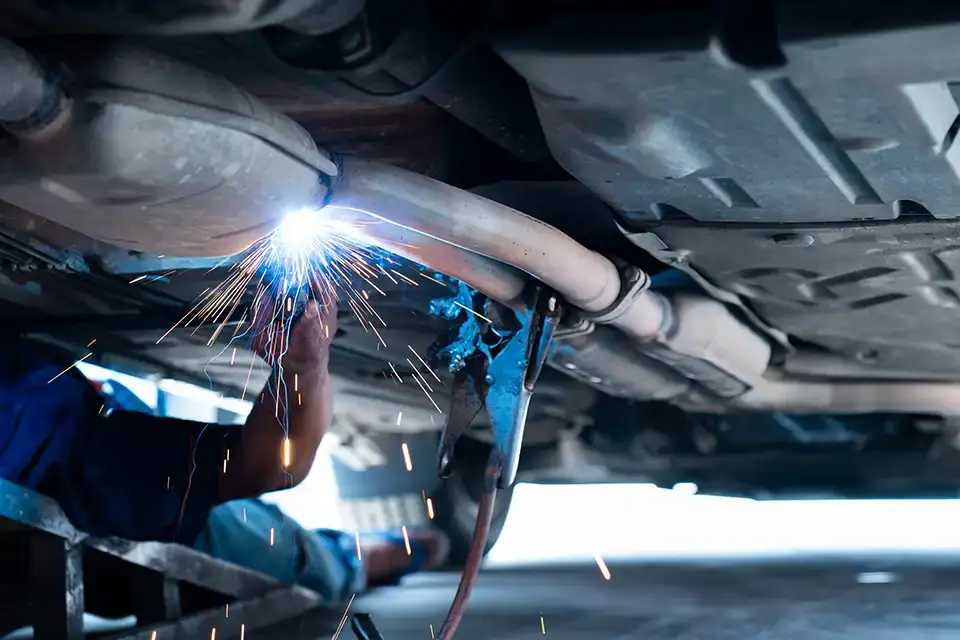
Step 2: Mid-Pipe and Muffler Replacement
Since the muffler was unsalvageable, we cut out the corroded section. We fitted a new aluminized steel muffler and a mid-pipe assembly. For a Kingston daily driver, this material offers the best balance of affordability and resistance to road salt corrosion .
Step 3: Oxygen Sensor Inspection
The “Check Engine” light was triggered by the exhaust leak confusing the oxygen sensor readings. We cleaned the sensors and verified they were functioning correctly, ensuring the engine computer would once again calculate the fuel mixture accurately.
Step 4: New Mounts and Hangers
We replaced the rubber isolators and metal hangers to pull the new exhaust tight to the chassis. The clearance was restored, eliminating the rattle over speed bumps.
The “After” Results: Performance, Sound, and Savings
When the driver returned for their post-repair follow-up, the difference was night and day. We conducted a final road test on Highway 401 to ensure everything held up under load.
Sound Reduction
Before the repair, the decibel level inside the cabin at 100 km/h made conversation difficult. After the repair, the cabin returned to a library-like quiet. The only sound now is the smooth hum of the engine working properly.
Fuel Economy Restoration
This is where the science comes in. Some car forums suggest that an exhaust leak creates “less backpressure” and thus improves gas mileage. This is a myth.
While a clogged exhaust hurts performance, an untuned leak actually tricks the oxygen sensors. They tell the engine computer to add more fuel (running “rich”) to compensate for oxygen they think is there. This wastes gas and damages the catalytic converter .
The Result: After our repair, the driver reported that their fuel economy returned to the original factory range (approx. 8.5 L/100km city). The monthly cost of driving dropped back down immediately.
Eliminating the Fumes
The smell of gas and exhaust inside the car vanished completely. For the driver’s family, the peace of mind knowing they aren’t breathing toxic fumes is the most valuable part of the repair.
Why Kingston Roads Are Tough on Exhausts
This repair story is common in Kingston. Our city’s climate creates a perfect storm for exhaust failure.
- Salt and Slush: The mixture of salt, sand, and moisture clings to the undercarriage. Because the exhaust system heats up and cools down rapidly, it acts like a pump, sucking this corrosive brine into every seam and joint.
- Stop-and-Go Traffic: Unlike highway cruising, city driving keeps the exhaust system wet longer, accelerating rust.
If your vehicle is approaching the 8 to 10-year mark, your exhaust is likely living on borrowed time .
The “Check Engine” Light Lesson
One crucial takeaway from this repair: Do not ignore the check engine light.
In this case, the light came on for the oxygen sensor (P0420 code range). Because the driver ignored it for a few months, a small gasket leak ($150 repair) allowed moisture to settle inside the muffler, rotting it out completely ($800 repair) .
By bringing the car in at the first sign of trouble, the driver could have saved hundreds. Instead, the delay turned a minor service into a major replacement.
Before You Sell That Old Car
Many drivers in this situation think: “My car is 10 years old, and it needs exhaust work. I should just sell it.”
However, selling a car with an active exhaust leak or a check engine light is difficult. In Ontario, a vehicle with an illuminated malfunction indicator light will fail a Drive Clean inspection (where applicable) or a safety standards certificate .
Investing in a targeted exhaust repair at 401 Tire and Truck Repairs is often the difference between selling a car for “scrap value” ($500) and selling a “safetied reliable commuter” ($4,000+).
Is Your Commuter Next?
You don’t need a loud roar to know your exhaust is failing. Look for these three silent signs:
- Rattling on startup: Usually a loose heat shield or broken hanger.
- Tickling sound accelerating: A ticking that speeds up with the engine often indicates a cracked manifold or blown gasket.
- Visible Rust Holes: If you see droplets of water dripping from a rust bubble on the pipe, a hole is about to form.
Conclusion
The transformation of this 10-year-old Kingston commuter car was dramatic. It went from a loud, smelly, fuel-guzzling nuisance back to a quiet, safe, and efficient machine.
At 401 Tire and Truck Repairs, we believe in keeping Kingston drivers safe without pushing unnecessary replacements. Whether your car is 2 years old or 12 years old, a healthy exhaust system is vital for your safety, your wallet, and the environment.
Is your vehicle making strange noises?
Don’t wait for a small leak to become a major breakdown. Visit 401 Tire and Truck Repairs for a comprehensive exhaust inspection. We will show you exactly what is happening under your car with digital images and a clear, upfront estimate