For professional drivers running routes through Kingston, Ontario, a roadside breakdown is more than an inconvenience. It is a test of preparation. While having the phone number for a reliable 24/7 mobile service is the ultimate safety net, the minutes before help arrives can feel like hours.
The team at 401 Tire and Truck Repairs has responded to hundreds of roadside calls across this region. We have seen what works and what fails when a rig stops moving. This guide focuses on five specific categories of supplies that actually make a difference. No gimmicks. No overpacking. Just practical gear for drivers who take their safety seriously.
1. Professional-Grade Lighting and Warning Devices
Darkness complicates every roadside situation. A dead alternator or a blown tire after sunset leaves you vulnerable. The small flashlight on your phone is not adequate for inspecting brake chambers or suspension components.
What to Carry
Invest in a rechargeable LED work light with at least 500 lumens. Headlamps are superior because they keep both hands free. For warning other drivers, pack three LED road flares or the traditional reflective triangles. A spare battery pack for your work light completes the kit.
Why This Matters in Kingston
The sun sets early during winter months along this lakefront corridor. Fog rolls in unexpectedly from Lake Ontario, reducing visibility to dangerous levels. Traditional chemical flares produce smoke and can be extinguished by slush. LED flares operate reliably in wet and freezing conditions.
How to Use These Items Correctly
Place your warning devices at increasing distances behind your truck. The first goes approximately 10 meters back. The second goes 30 meters. The third goes 60 meters. This pattern gives approaching traffic time to react. Never assume drivers see you just because your hazard lights are flashing.
Common Mistakes
Many drivers store their lighting kit in a side box that requires opening the truck door to access. Keep your lights inside the cab where you can reach them without exiting the vehicle. If you cannot see safely, you cannot set up your warning triangle pattern.
2. Cold Weather Survival Supplies
Kingston winters produce some of the most variable conditions in Eastern Ontario. A mild afternoon can turn into a freezing night within hours. When a truck loses electrical power or runs out of fuel, the cabin becomes a refrigerator.
What to Carry
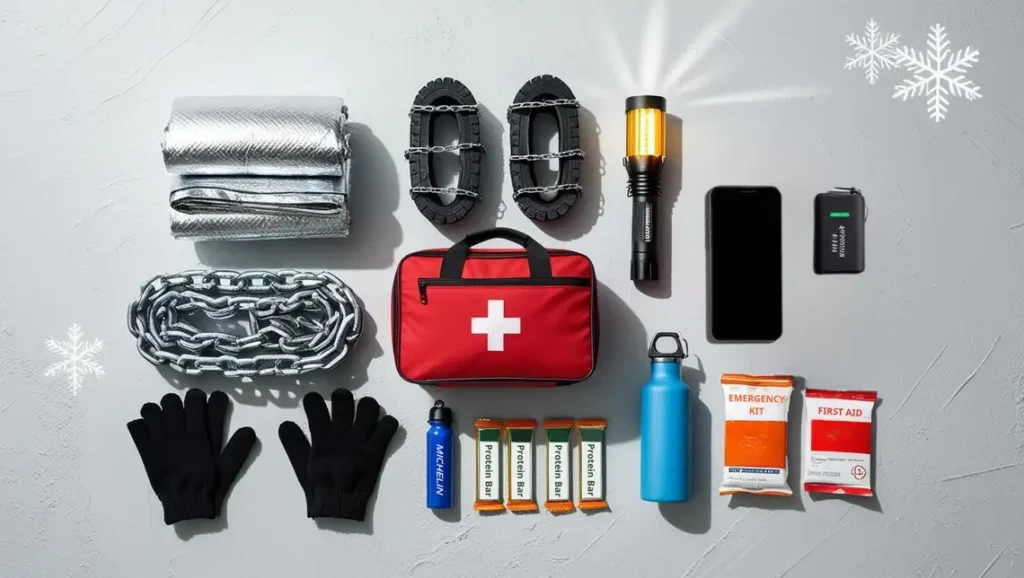
Pack an insulated thermal blanket made from heavy-duty Mylar or wool blend material. Add a pair of waterproof insulated gloves. Include a candle inside a deep metal tin. A single candle generates enough heat to prevent frostbite inside a cab. Store several high-calorie protein bars that do not freeze solid.
Diesel Anti-Gel Is Non-Negotiable
Fuel gelling is the most common winter breakdown in this region. When temperatures drop below -15°C, untreated diesel turns into waxy sludge. It clogs filters and fuel lines. A bottle of anti-gel additive costs less than twenty dollars. It can save you from a tow bill exceeding five hundred dollars.
Add the anti-gel before fueling. This ensures proper mixing. Pouring it into a full tank after the fact is less effective. Keep a bottle in your side box during all winter months.
When Professional Help Becomes Necessary
Survival gear keeps you warm temporarily. It does not fix a frozen fuel system or a dead alternator. If your truck has been sitting for more than an hour in extreme cold and will not start, call for assistance. The mechanics at 401 Tire and Truck Repairs carry specialized equipment for thawing frozen components safely.
Local Weather Reality
The Kingston area experiences lake-effect conditions that do not appear on regional forecasts. A driver stopped near the Cataraqui River can face wind chills ten degrees colder than downtown. Always pack for temperatures fifteen degrees below the forecast low.
3. Temporary Air Line Repair Kit
Modern heavy trucks rely on compressed air for brakes, suspension, and transmission functions. A sudden pressure loss stops your vehicle immediately. While major air system failures require professional diagnostics, small leaks in nylon air lines are often temporary.
What to Carry
Assemble a small kit with the following items:
- One roll of Teflon tape for sealing threaded fittings
- A set of 1/2-inch and 3/8-inch collets and plugs
- A pair of side cutters for clean cuts
- A small spray bottle with soapy water for leak detection
How to Make a Temporary Repair
If you hear air hissing from a nylon line, locate the exact spot using soapy water. Bubbles reveal the leak. Use the side cutters to cut the line cleanly at the damaged point. Push a fitting collet onto the line. Insert the plug. Wrap the threaded connection with Teflon tape. This temporary fix can restore enough air pressure to move your truck to a safe parking area.
What This Repair Cannot Do
A field repair does not fix failed air dryers, frozen valves, or ruptured air bags. It addresses only small line leaks. If your air pressure drops again after moving a few kilometers, stop immediately. Continuing to drive with compromised brakes endangers everyone on the road.
Why This Kit Matters Locally
The temperature swings common to this region cause air line fittings to expand and contract repeatedly. This stress creates small cracks that larger leaks. A driver who can temporarily seal a cracked line avoids a multi-hour wait on a narrow shoulder.
4. Tire Emergency Arsenal
Tire problems account for the largest share of roadside calls in this area. Construction debris on urban streets, random hardware shed by trailers, and normal wear all contribute. Not every flat tire requires a full roadside replacement.
What to Carry
Pack the following lightweight but effective items:
- A valve stem tool with spare valve cores
- A heavy-duty tire plug kit for radial tires
- A 12-volt air compressor rated for high PSI
- A tire pressure gauge that reads accurately above 100 PSI
The Valve Core Solution
A surprising number of “flat tires” result from loose or damaged valve cores. These small components cost pennies. Replacing one takes approximately ten seconds with the correct tool. This simple fix has saved countless drivers from unnecessary wait times.
When Plugging Makes Sense
If you discover a nail or screw in the tread area, a quality plug can seal the leak temporarily. This allows you to drive to a repair facility at reduced speed. The plug is not a permanent solution. It does not repair sidewall damage, blowouts, or heat-separated tires.
When to Stand Clear
Never attempt a plug repair on a smoking tire. Never work near a wheel showing tread separation. Never approach a damaged rim that could fail catastrophically. If the tire shows signs of heat damage or structural failure, step back and call for professional assistance. 401 Tire and Truck Repairs performs safe roadside tire replacements using heavy-duty equipment designed for this exact situation.
5. Basic Diagnostic and Documentation Tools
Modern trucks function as computers on wheels. When a fault light appears, the engine management system often reduces power or limits speed. Knowing why the light activated helps you decide whether to pull over immediately or drive cautiously to a safer location.
What to Carry
Two simple items provide enormous value:
- A basic digital multimeter
- A small notebook with a pen
Using the Multimeter
Electrical issues occur frequently in humid climates like this lakefront region. A multimeter allows you to check battery voltage and alternator output. Reading 12.6 volts or higher with the engine off indicates healthy batteries. Reading below 14 volts with the engine running suggests alternator problems.
Providing this voltage information when you call for service helps the responding technician bring correct parts. This saves time. Time saved means faster repairs.
The Notebook Method
When your dashboard displays a fault code, write it down immediately. Many drivers memorize the code only to forget it after shutting down the engine. Having the exact code recorded ensures accurate diagnosis even if the computer resets.
The Battery Reset Caution
Disconnecting both batteries for a few minutes will clear stored fault codes. This sometimes eliminates “ghost codes” triggered by temporary electrical glitches. However, resetting also erases diagnostic information that a mechanic needs. Always record existing codes before attempting a reset. If the code returns after restarting, the underlying problem remains and requires professional attention.
Putting Your Kit Together
You do not need a massive storage system to carry these five categories of supplies. A medium-sized plastic tote fits all recommended items. Store it in a cab location that remains accessible even if you cannot open exterior side boxes.
Seasonal Checklist
Review your emergency kit four times per year:
- Check battery levels in all lighting devices
- Replace expired food items
- Verify that anti-gel additive is present during winter months
- Test your air compressor operation
What Not to Carry
Avoid storing flammable liquids inside the cab. Leave full fuel containers, propane cylinders, and loose batteries outside the living space. Do not carry welding equipment or attempting complex repairs without proper training.
The Limits of Self-Reliance
The gear described here addresses common, minor issues. It keeps you safe during delays. It buys time until professional help arrives. It does not replace the knowledge and equipment of experienced mechanics.
When you face electrical failures, major air system problems, structural tire damage, or any issue you do not fully understand, step back from the vehicle. Your safety matters more than any load or delivery schedule.
Trust the Kingston Professionals
The team at 401 Tire and Truck Repairs lives and works in this community. We understand the specific demands of running heavy trucks through Kingston and the surrounding 401 corridor. Our mobile service vehicles carry the diagnostic tools, replacement parts, and heavy lifting equipment that no driver should attempt on a roadside.
We respond to tire blowouts, air system failures, electrical faults, and winter freeze-ups every day. Our mechanics arrive prepared. We get you moving safely so you can complete your haul and return home.
Final Thoughts for the Road
Preparation separates professional drivers from everyone else. The five items outlined here cost less than a single tow bill. They fit in one corner of your cab. They work when you need them.
Check your kit before every winter trip through this region. Replace used items promptly. Train yourself on the proper use of each tool before an emergency happens.
And when the problem exceeds your kit—when the air system collapses, the electrical gremlins multiply, or the tire shreds completely—make the smart call. Your job is to drive. Our job is to fix.
Need roadside assistance in Kingston or along the 401? Contact 401 Tire and Truck Repairs. We bring the shop to you.